
A grazing table doesn't have to cost a fortune to look full and beautiful. The secret is knowing where to spend, where to save, and how to arrange everything so the table looks enticing even when the ingredients are humble.
I've been entertaining friends and family for almost 30 years, and these are the tricks I lean on whenever I'm feeding a crowd. Below you'll find how to plan out your grazing table, how much food to buy, cheaper foods that fill the most space, and how to put it all together so no one will ever guess you were on a budget.

Table of Contents
What Is a Grazing Table?
A grazing table is a charcuterie board scaled up to cover an entire table. Meats, cheeses, crackers, fruit, veggies, and dips are spread out so guests can help themselves and "graze" throughout the party.
You can group several boards and platters together on a table, or build one right on the table over parchment or butcher paper. If you've made a charcuterie board before, you already know the basics. This is just the same idea, only bigger!
Start With a Plan (and a Budget)
The quickest way to blow your budget is to start shopping before you've answered a few questions. Here's what to figure out first:
- How many people are you serving? Everything else depends on this number.
- Is it an appetizer or the main course? A grazing table that leads into dinner needs far less food than one that is dinner.
- How long will guests be grazing? If it's just one hour, you can put out much less food than if they'll be grazing for three. (Tip: If you know the party will be going for more than two hours, make a smaller table and refill it as needed so the food isn't sitting out longer than that).
- What size table and boards will you need? My guide to charcuterie board dimensions can help you figure that out.
- Will you set themed boards on the table, or will the table itself be the board? If you already have some boards or platters, using those won't cost you anything. If not, don't worry about it! Just cover the table with paper and build right on top of it.
Once you have your answers to those five questions, set your budget and spend it in this order:
- Meats and cheeses first
- Next are accoutrements like nuts, jams, and bread
- Lastly, any flowers or decorations with whatever's left in your budget. Don't stress if you don't have any money left; I'll show you how to decorate for almost nothing below.
Equipment You'll Need
- A table: To help keep costs down, use what you've already got or buy or borrow a cheap folding table (or two, three, etc., and put them together). Don't worry about how it looks, as you can easily cover it, and no one will be the wiser.
- Tablecloths: Most of the tablecloth will be hidden, so again, don't worry as much about how they look. An inexpensive, plain white tablecloth will do just fine. If you want to hide a shabby table, get one long enough to kiss the ground.
- Decorations: There's more on this below, but keep it in mind as you plan. Inexpensive decorations can not only fill in empty spaces but can also turn an "okay" grazing table into "wow"!
- Something to build on: Big wooden boards look great but they're pricey, and you don't really need them. Sheets of parchment paper or a roll of butcher (kraft) paper work really well, and the bonus is that they make cleanup really easy. If you already own a few large boards, you can use them to raise some foods higher to create some depth.
- Small bowls and ramekins: Anything wet (dips, olives, pickles, jams) should go in a bowl. Sometimes I'll put things like olives directly on the table, but I'll make sure they're patted dry first, and that they fit snugly so they don't roll around. You can also spread one ingredient between several small bowls and place them in different areas.
- Serving utensils: Small tongs, spoons, and cheese knives scattered around the table will make it much easier for your guests to grab what they need. It also means less time waiting for someone else to finish.
- Plates and napkins: Keep it simple and set out small appetizer plates with napkins next to them. They're all you really need, and if you place some at each end of the table you won't get a line on just one side.
How Much Food Do You Need?
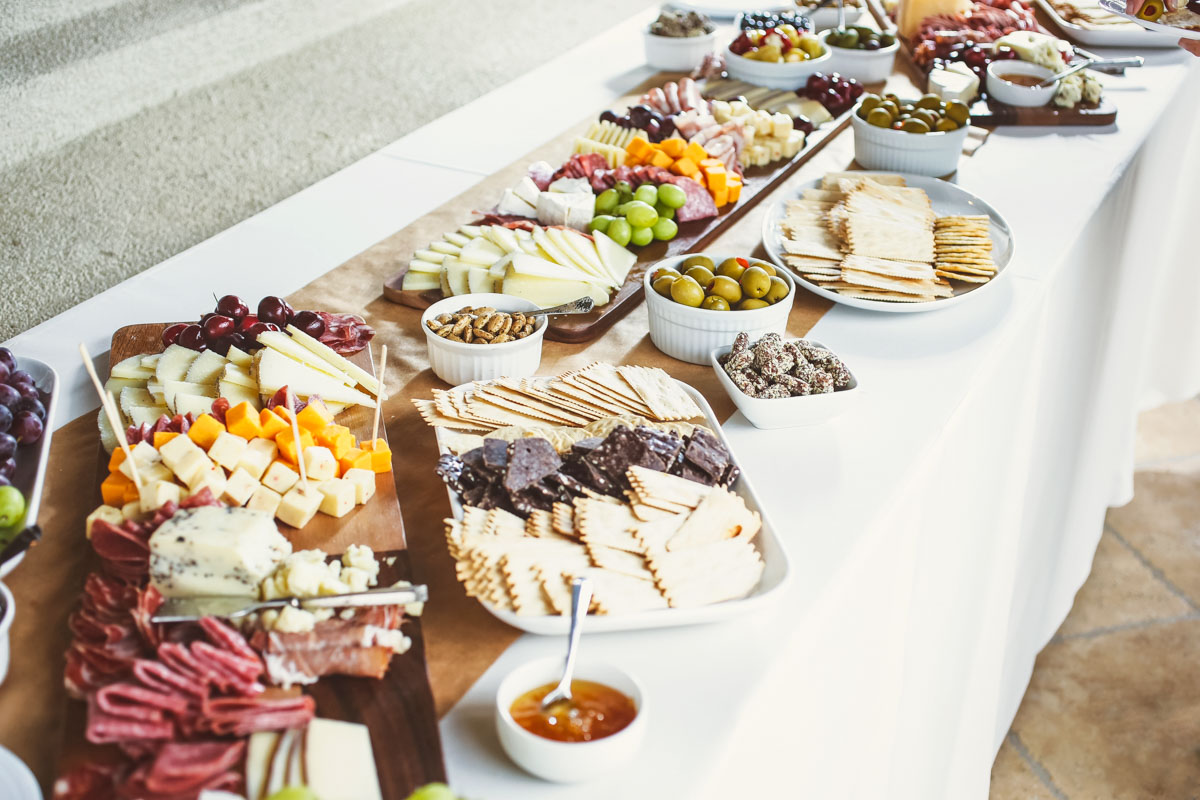
If your grazing table is meant to be the appetizer, plan on about 4 ounces of meat and cheese combined per person (2 ounces of each). If it's the main meal, double it. Then add your bread, crackers, fruit, and veggies to fill in the rest (and they're the less expensive ingredients). For other party sizes, here's how much meat and cheese to buy, plus a free calculator that does the math for you.
Sample Grazing Table Shopping List for 20 Guests
Use this list as a guide for a grazing table that's served as an appetizer over about two hours for 20 people. If you've got more or fewer guests, just scale it up or down, or use the recipe card at the end of this post to scale it for you.
If your grazing table is the main course, double the meats and cheeses and add an extra baguette plus a basket of rolls.
| Item | How much | Budget tip |
|---|---|---|
| Cheese (3 to 4 kinds) | 2 ½ pounds total | One "star" cheese plus cheddar, gouda, or a big round of brie |
| Cured meats (2 to 3 kinds) | About 2 ½ pounds total | Salami gives you the most for your money |
| Baguettes | 2 | Slice and toast them into crostini yourself |
| Crackers | 3 to 4 boxes | Store brand is fine once they're out of the box |
| Grapes | 3 to 4 pounds | Cut into small clusters to fill gaps |
| Apples and/or pears | 6 | Slice right before serving |
| Fresh veggies | About 3 pounds | Buy whole and cut them yourself |
| Dips and spreads | 2 to 3, about 2 cups each | Homemade costs far less than store-bought |
| Olives and pickles | 2 to 3 jars | Serve in small bowls |
| Nuts | About 1 pound | Buy from the bulk bins |
| Jam or honey | 1 to 2 jars | Pepper jelly over cream cheese is a cheap crowd-pleaser |
| Something sweet | 1 to 2 bags | Yogurt pretzels or chocolate pieces |
Cheap Foods That Fill a Grazing Table
These are the inexpensive foods that take up the most room and still look great. Mix and match from each group:
- Breads and crackers: baguette crostini, breadsticks, pretzel rods, pita chips, and store-brand crackers. If you fan them out in long lines, they'll cover a lot of table.
- Fruit: grapes, apples, pears, and clementines, plus whatever's in season and on sale. Dried apricots and other dried fruits will also work and add a lot of color.
- Veggies: baby carrots, sliced cucumbers (use the smaller Persian cucumbers if you can find them), snap peas, bell pepper strips, cherry tomatoes, and pickled green beans or asparagus.
- Cheeses: cheddar, gouda, colby jack, and pepper jack cut into cubes, plus a big round of brie or an herbed goat cheese log. See my list of the best cheeses for a charcuterie board for more ideas.
- Meats: salami, pepperoni, and summer sausage stretch the furthest. Use pricier meats like prosciutto sparingly to help keep your budget in check.
- Dips and spreads: whipped ricotta, hummus, pimento cheese, spinach dip, or a block of cream cheese topped with pepper jelly or blackberry jalapeño jam (my favorite, don't sleep on that one)!
- Something sweet: yogurt-covered pretzels, chocolate pieces, cookies, or even popcorn. Trader Joe's is a great place to find unique little treats for your boards, or just grab one of their chocolate bars.
- Extras: olives, pickles, and deviled eggs (eggs are one of the most budget-friendly proteins you can put out). More ideas are in my list of charcuterie accoutrements.
12 Ways to Save Money on a Grazing Table
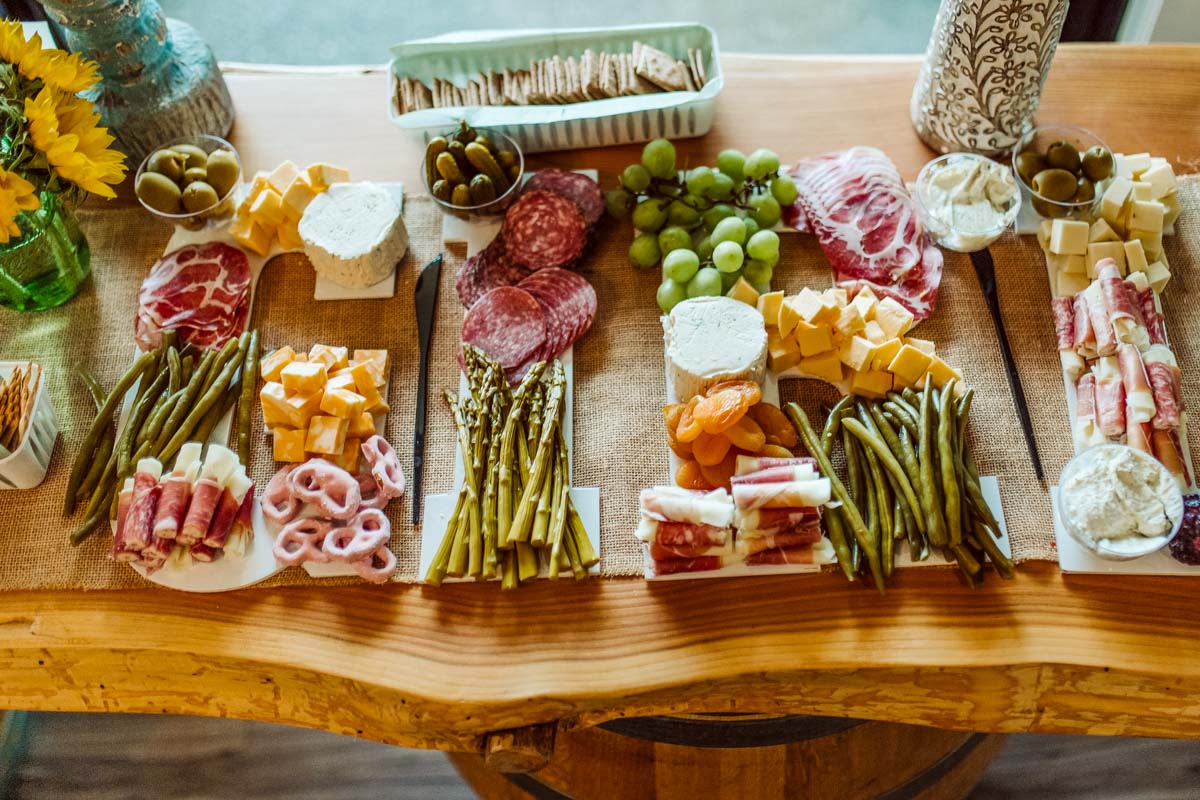
- Buy a few things in bulk: Choose a few less expensive ingredients and buy them in larger quantities. Grapes, for example, aren't cheap, but they feed a crowd and split easily into small bunches to fill space all over the table. Make a Costco run to see what you can find there before doing your other shopping!
- Make your own crostini: A package of prepared crostini isn't cheap, and making your own is not only quick and easy, but it costs just a fraction of the price (they can be made a few days ahead, too). Dress them up as apricot brie crostini or apple and brie crostini for a few showstoppers!
- Choose budget-friendly fruit: Apples and pears cost much less than berries, and slicing them yourself keeps costs down even more. Plus they pair so well with cheese that you could serve just these two fruits and be just fine (especially if you use different varieties and colors).
- Skip the pricey artisan cheeses: Cheddar and gouda are delicious and always popular on a grazing table, especially with sliced apples and grapes. Brie is another great choice; Costco sells a large round for a good price that can be sliced and spread around the table.
- Make one cheese the star: If you really want to use an artisan cheese, pick just one and make it the star (Trader Joe's is great for less expensive artisan cheeses, too; here's everything I used on a $100 Trader Joe's grazing board). Print a card with its details (how long it was aged, flavor notes, and pairings), set it in a pretty frame, and place it next to the cheese. It'll elevate the whole table for the price of one wedge.
- Add homemade dips and spreads: These are your inexpensive but delicious fillers: they take up room and can be made ahead of time. Whipped cheeses (like this whipped goat cheese with honey) give you a lot more bang for your buck.
- Don't sleep on salami: It's one of the most affordable cured meats, it's easy to fold into pretty shapes, and a little goes a long way. My salami charcuterie board shows how gorgeous it can look on its own!
- Check the deli counter for end pieces: Some delis package the odds and ends of meats and cheeses they can't slice anymore, and they're usually marked down. Cut them into cubes and add toothpicks.
- Shop sales and store brands: Buy crackers and other packaged goods on sale, and check warehouse clubs and discount grocers for cheese and meat. Once crackers are out of the box, no one can tell the brand. Costco carries a good variety of crackers, and I've picked up a box with three different types there, too.
- Fill space with non-food items: If your table is bigger than you need, don't fill every inch with food! Inexpensive fresh flowers, stacks of plates and napkins, wine glasses, or a large water pitcher and cups can help fill the space. One idea is to buy one bouquet of flowers, then put just one or two into several vases set around the table.
- Use several small tables: Set one table for cheese and meats, another for accoutrements, and a third for dips and veggies. Even though you're serving the same amount of food, the spread will look much larger.
- Make a shopping list and stick to it: This might be the simplest tip but it's also the one that will save you the most. Make your list at home before you shop (and don't let the specialty cheese case talk you out of it).
How to Make a Cheap Grazing Table Look Full
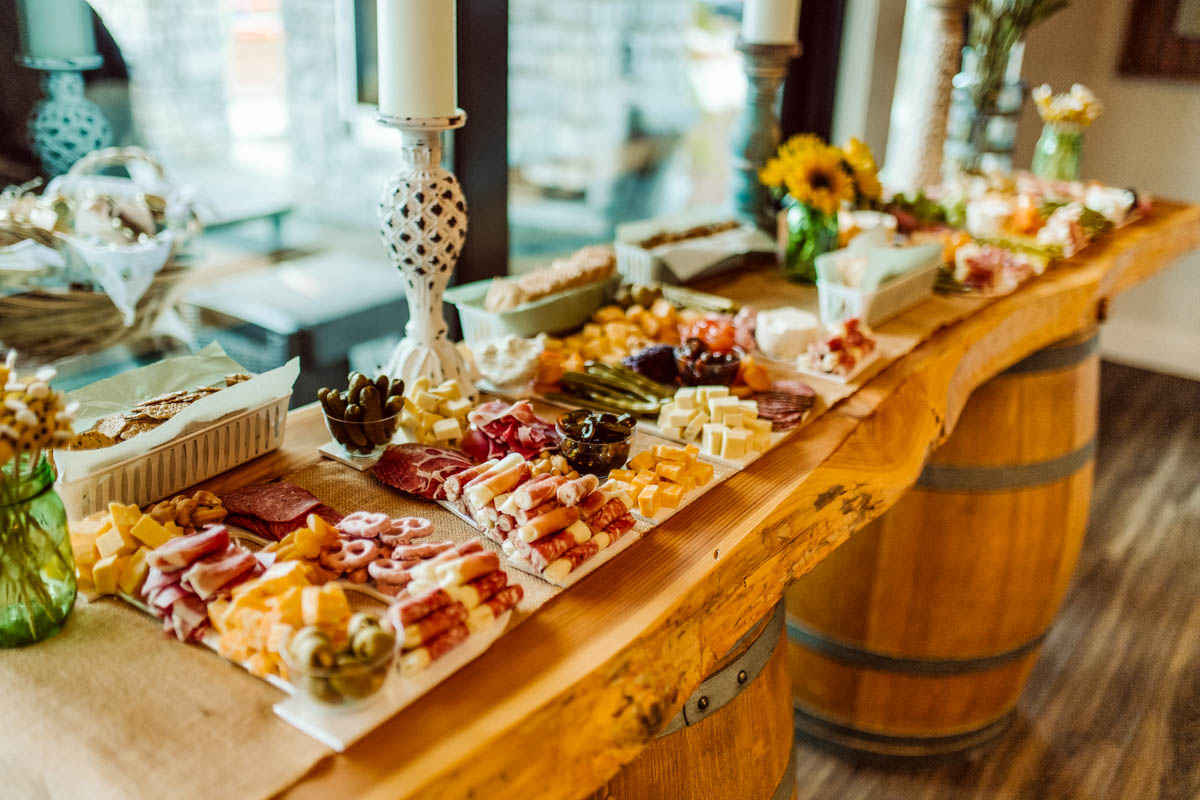
A grazing table looks beautiful and full because of how it's arranged, not how much it costs. You can fill your table with less food than you'd think by following these steps:
- Cover the table: Lay down the tablecloth, then a layer of parchment or butcher paper where the food will go.
- Add height first: Place overturned bowls or small, sturdy boxes under the paper, and set out cake stands or a board (propped up on one of those small boxes). A table with both high and low spots will look much more full than one that's flat.
- Place your anchors: Set out bowls of dips, olives, and pickles, spacing them across the whole table.
- Add the cheeses: Arrange your cheeses near the anchors you just placed down. If you'd like, you can leave a few wedges whole and add a cheese knife which can help make it look more full.
- Make meat "rivers": Fold salami and other meats into long, winding lines that run between the cheeses. They'll help to connect everything and can cover a lot of space. Plus it looks far more interesting than just placing down a pile of meat.
- Fan out your crackers and bread: Lay crackers and crostini in long overlapping rows along the rivers. Again, this is much more pleasing to the eye than just a pile of crackers and bread.
- Cluster your fruit and veggies: Add these in small clusters in different areas of the board. Put the biggest bunches of grapes at the corners and ends.
- Fill every gap: Nuts, berries, dried fruit, pretzels, and sprigs of fresh herbs should go on last and fill any holes or gaps.
- Step back and balance: If one area looks too heavy with one color, repeat that color on the opposite side of the table. Just swapping one or two things will usually make it all come together.
- Keep some food in reserve: Don't put everything out at once, especially if it'll be out more than two hours (that's the max time you should leave food sitting out). Keep some extras in the fridge and refill as you go. The table will stay fresh and full all night! If you know you'll be busy with other things, assign one or two trusted guests to check on this for you.
Small, Round, and Themed Grazing Table Ideas
Small grazing tables: A kitchen island, buffet, or side table works great for a smaller group. Use one large board or a sheet of paper, a few bowls, and plenty of height so the spread doesn't look flat. You can also try assembling a few things in advance, like charcuterie skewers.
Round grazing tables: Start in the center with your tallest piece, like a cake stand or a small vase of flowers, and work outward in rings or pie-shaped wedges. That way your guests can reach everything from any side, and a round table looks full with less food than a long one.
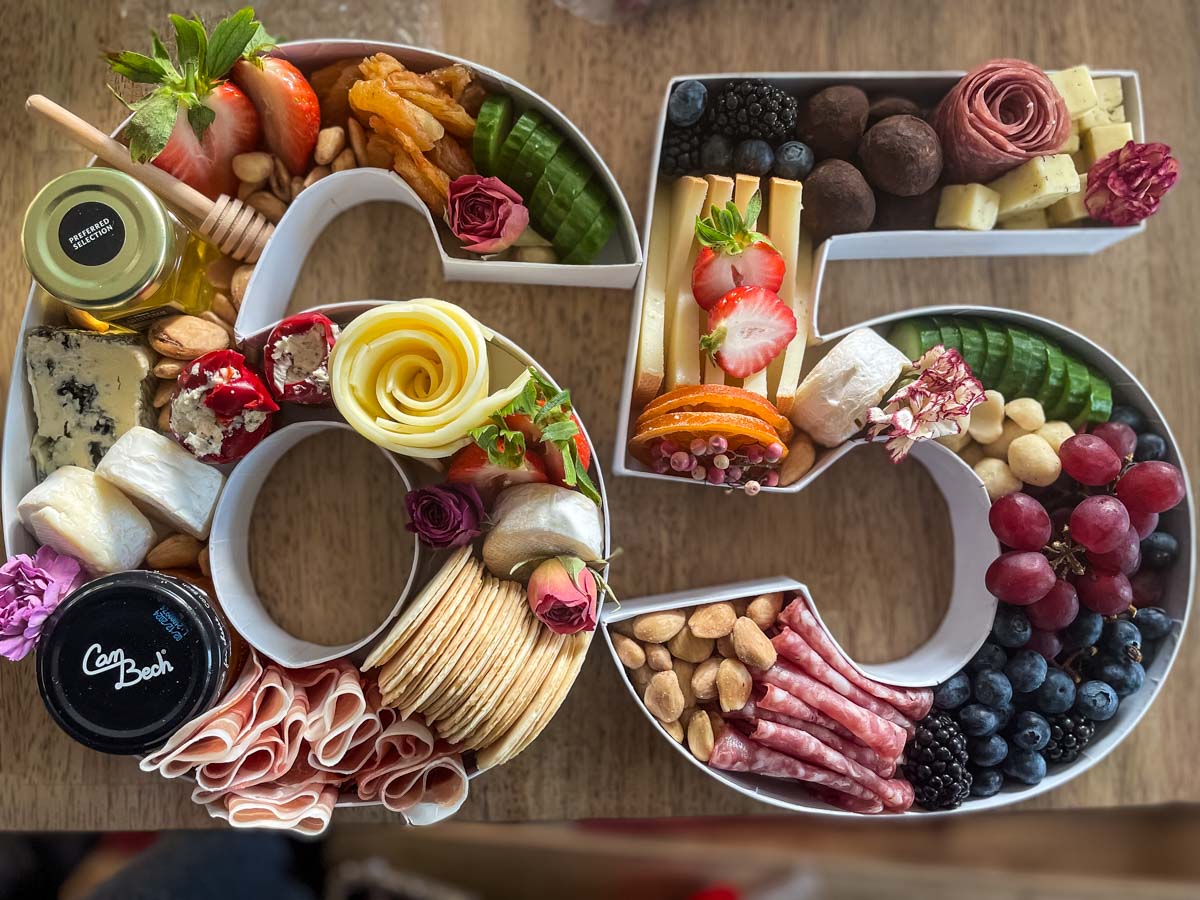
Themed grazing tables: Inexpensive letter or number-shaped trays can spell out a name, an age, or "BABY," which makes them perfect for showers and birthdays. Seasonal colors are another free way to add a theme; for inspiration, see my Christmas charcuterie board ideas or summer charcuterie board ideas.
I used numbers for my parents' 65th anniversary and surprised them with it. This is a great way to add a special focal point to a grazing table without much extra cost. The salami and cheese roses don't cost anything extra than laying them flat, and they're gorgeous, too!
Decorations That Cost Next to Nothing
Inexpensive decorations can turn an "okay" grazing table into a "wow," and the best ones are probably already in your house.
- Shop your home: Do this first, since you might be surprised when you take a look around! Small bowls, platters, vases, cake stands, and even small wooden boxes are all things you can use to elevate your grazing table.
- Look outside: Greenery from your yard is gorgeous on a grazing table, and sprigs of rosemary or other fresh herbs can help fill any gaps (plus they smell wonderful).
- Split up grocery store flowers: One inexpensive bouquet divided into a few small vases or mason jars goes a long way.
- Add a runner: A strip of burlap or a fabric runner down the middle of the table can add a lot of texture and color for just a few dollars. You might have something at home you can repurpose for this, too, which is even better.
- Put up signs: A chalkboard or a few printed cards labeling the food (or just making guests laugh) add personality for almost nothing. Borrow a line from my list of funny charcuterie quotes!
📖 Recipe
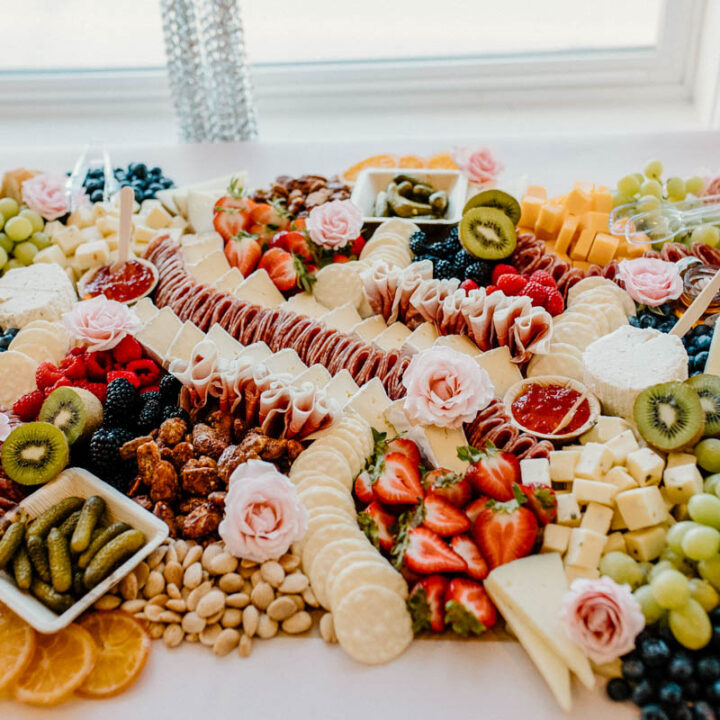
Budget Grazing Table for 20
A beautiful grazing table for 20 guests that's easy on the wallet. Everyday cheeses, salami, homemade crostini, and plenty of fresh produce make it look full and beautiful for a fraction of the cost.
Ingredients
Cheese
- 10 oz cheese (a "star" artisan cheese)
- 10 oz cheese, such as sharp cheddar
- 10 oz cheese, such as gouda or colby jack
- 10 oz cheese, such as brie
Meat
- 16 oz meat, such as salami
- 16 oz meat, such as pepperoni or summer sausage
- 8 oz meat, such as prosciutto
Bread and crackers
- 2 baguettes
- ⅓ cup olive oil, for the crostini
- 3 boxes of crackers, different varieties
Fruit and veggies
- 3 to 4 lb grapes, red, green, or both
- 3 apples
- 3 pears
- 1 lemon, halved
- 3 lb veggies (1 lb each, such as baby carrots, snap peas, cucumbers, or bell peppers)
Dips and spreads
- 6 cups dip (2 cups each of three dips such as whipped ricotta, hummus, or pimento cheese)
- 2 jars jam and/or honey
Extras
- 1 jar olives
- 1 jar pickles
- 1 jar pickled veggies, such as green beans or asparagus (optional)
- 1 lb nuts
- 2 bags of something sweet, such as yogurt-covered pretzels or chocolates
- Fresh herbs or greenery, for garnish
Instructions
- Make the crostini. Heat the oven to 400°F. Slice the baguettes about ¼ inch thick, arrange the slices on baking sheets, and brush them lightly with olive oil. Bake for 8 to 10 minutes, just until golden, then let them cool completely.
- Prep the food. Cut the cheeses into cubes, slices, and wedges. Cut the veggies, and split the grapes into small clusters. Wait to slice the apples and pears until just before serving.
- Set the table. Cover the table with the tablecloth, then lay parchment or butcher paper where the food will go. Tuck overturned bowls or small boxes under the paper to create high and low spots. Put down any boards you're using, too.
- Place the anchors. Spoon the dips, jams, olives, and pickles into small bowls and space them across the whole table.
- Add the cheese and meat. Arrange the cheeses near the bowls. Fold the meats into long, winding "rivers" that run between them.
- Fan out the crostini and crackers. Lay them in long, overlapping rows along the meat rivers.
- Add the fruit and veggies. Slice the apples and pears, and squeeze the lemon over them to help prevent them from browning. Add the fruits and veggies by color in clusters, with the biggest bunches of grapes at the corners and ends.
- Fill the gaps. Fill any empty spots with nuts, sweets, and fresh herbs or greenery. Step back and balance colors across the table.
- Serve and refill. Set out utensils, plates, and napkins. Keep backups in the fridge and refill as needed.
Notes
- Main course: If the grazing table is the meal, double the meat and cheese and add an extra baguette or a basket of rolls.
- Fewer cheeses: To use only 3 cheeses, buy about 13 oz of each.
- Make ahead: The crostini will keep for a few days in an airtight container at room temperature (do not put them in the fridge or they'll soften), and most dips keep for 1 to 2 days in the fridge. Cut hard cheeses and veggies the day before.
- Food safety: Don't leave meat, cheese, or dips at room temperature for more than 2 hours (1 hour above 90°F). If your grazing table will be sitting out longer than that, make a smaller table and refill it throughout the evening.
- Save more: Buy crackers on sale or use a store brand, and check the deli counter for marked-down end pieces of meat and cheese.
- Equipment needed:
Folding table(s)
Plain white tablecloth(s)
Parchment paper or butcher paper
Baking sheets
6 to 8 small bowls or ramekins
Small tongs, spoons, and cheese knives
Appetizer plates and napkins
Nutrition Information:
Yield: 20 Serving Size: 60Amount Per Serving:Calories: 553Total Fat: 44gSaturated Fat: 17gUnsaturated Fat: 7gCholesterol: 74mgSodium: 1472mgCarbohydrates: 23gFiber: 2gSugar: 10gProtein: 23g
The nutrition information is HIGHLY estimated as we don't typically provide exact amounts for our charcuterie boards, and this specific "recipe" is more of a guide. For more accurate information, we suggest using an online nutrition calculator and entering the exact amounts and ingredients you use for your particular grazing table.
Frequently Asked Questions
How much does it cost to make a grazing table?
This depends on your guest count, what you choose to serve, and where you shop. Most of the money goes to meat and cheese, so the fastest way to lower the total is to choose everyday cheeses, go heavy on salami, and fill the rest of the table with bread, produce, and homemade dips.
How far ahead can I prepare a grazing table?
Crostini can be made a few days ahead and stored in an airtight container, and most dips keep for a day or two in the fridge. Cut harder cheeses and veggies the day before. Slice any apples and pears and assemble the table within an hour or two of guests arriving.
How long can a grazing table sit out?
Perishable foods like meat, cheese, and dips shouldn't sit at room temperature for more than 2 hours, or 1 hour if it's above 90°F. That's why I keep backups in the fridge and refill the table instead of putting everything out at once.
What can I use instead of charcuterie boards?
Parchment paper, butcher paper, platters, baking sheets, cutting boards, and even a clean tray all work. For a large grazing table, covering the table with paper and building right on top of it is the cheapest option.
What's the difference between a grazing table and a charcuterie board?
Mostly just the size. A charcuterie board fits on one board, while a grazing table covers a whole table and usually includes more variety.
A beautiful, cheap grazing table comes down to a plan, a list, and a few smart choices. Start with your guest count, spend on meat and cheese first, add some inexpensive breads and produce, and arrange it using these tips and you'll have one gorgeous table for less!

- Whipped Feta Board with Dates, Pistachios and Honey - November 13, 2026
- Easy Thanksgiving Dessert Board with Mini Pies - November 10, 2026
- Prosciutto Wrapped Dates with Blue Cheese - November 7, 2026


Leave a Reply